Air quality and humidity
Indoor air quality and humidity control
In this climate, indoor air quality is mostly a humidity story. Get moisture under control and a long list of other complaints tends to resolve with it.
Start here
Humidity is the variable that matters most here
Houston’s climate is classified as humid subtropical, with relative humidity averaging near 75% across the year, morning readings frequently above 90 percent, and roughly 50 inches of rain annually. Whatever else is going on in a house, moisture is the background condition.
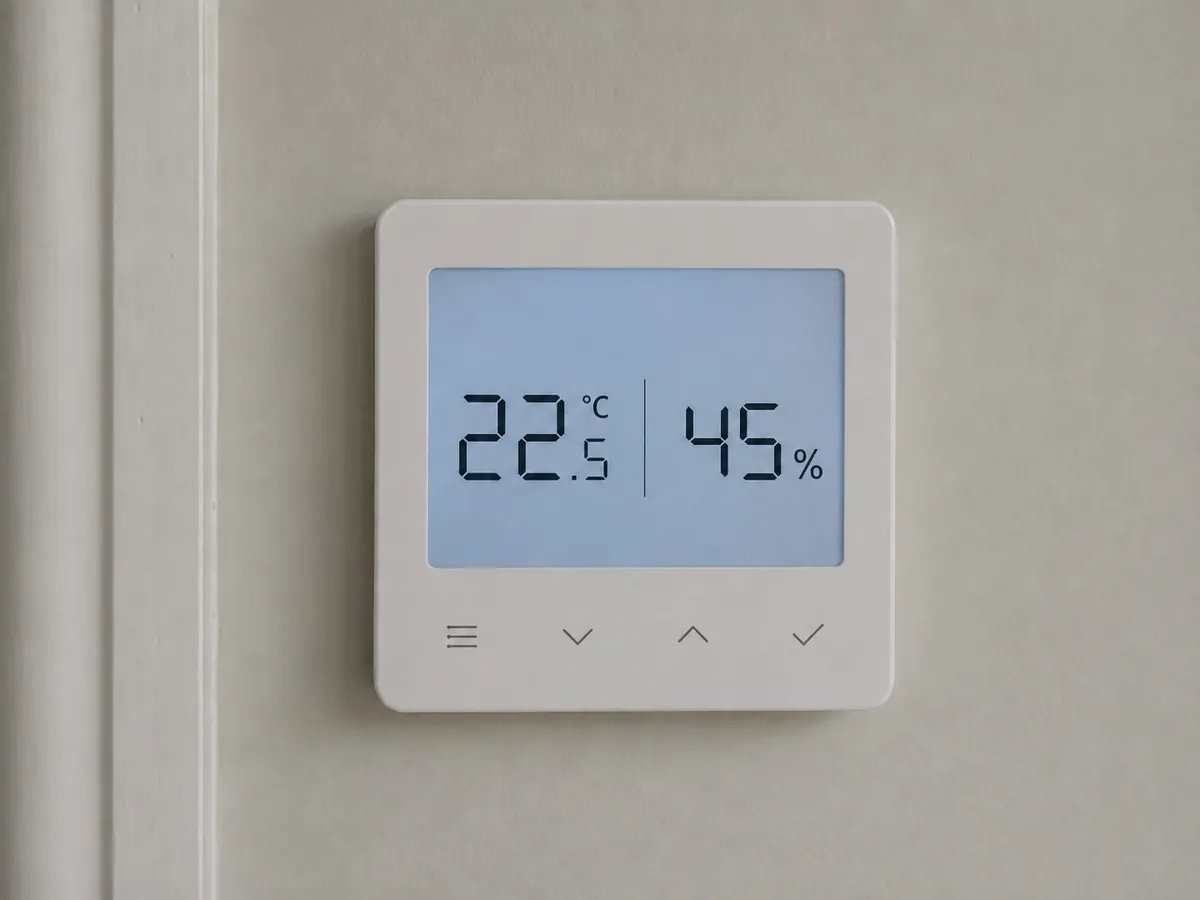
That matters because humidity, not temperature alone, determines whether a room feels comfortable. Air at 74°F and 45 percent humidity feels pleasant. The same air at 74°F and 65 percent feels clammy, and the instinctive response is to turn the thermostat down, which costs money and does not fix the sensation.
An air conditioner is also a dehumidifier. As air passes across a cold evaporator coil, moisture condenses out and drains away. That process needs run time. A system that satisfies the thermostat in short bursts cools the air without dehumidifying it much, which is exactly why oversizing produces a house that is cold and clammy at the same time.
So the first questions on any humidity complaint are about the system, not about add-on equipment: is it correctly sized, is airflow across the coil correct, and is the duct system pulling in humid attic air.
What actually helps
In roughly the order worth trying
Correct the airflow and the duct
Sealing return leaks stops the system importing hot, humid attic air. This is unglamorous and frequently the whole answer. See ductwork.
Better filtration, correctly specified
A deeper media filter captures far more than a one inch panel and lasts longer. The constraint is static pressure. A filter too restrictive for the system reduces airflow, which can create a bigger problem than it solves.
Dedicated dehumidification
Where the load is genuinely low and the house genuinely tight, a whole-house dehumidifier removes moisture independently of whether the system is calling for cooling.
Right-sized equipment at replacement
Two-stage and variable-speed systems run longer at lower capacity, which removes far more moisture than a single-stage system cycling on and off. This is the strongest argument for them in this climate.
Coil and drain hygiene
A permanently damp coil and pan in a warm attic will grow biological material. That is the source of most musty smells that appear when the system starts. Part of maintenance.
Controlled ventilation, carefully
Fresh air is good. Uncontrolled fresh air in a humid climate is a moisture load. Any ventilation strategy here has to account for what it brings in with the air.
Being straight about it
The part of this industry that oversells hardest
Indoor air quality is where home services marketing gets least disciplined. Devices get sold with impressive percentage claims measured under laboratory conditions that bear little relation to a working house with an open front door and a dog.
A more useful way to think about it: air quality problems have causes. A musty smell when the system starts is usually a wet coil or a drain issue. Dust reappearing immediately after cleaning is usually duct leakage pulling attic dust into the airstream. A clammy house is usually oversizing or airflow. Allergy symptoms that improve when you leave the house point at filtration and at what the duct system is picking up.
Find the cause and the fix is often cheaper than the device. Where a device genuinely is the right answer, it works far better on a system whose underlying problems have been sorted out first.
Worth knowing before you call
- What you actually notice: smell, dust, stuffiness, allergy symptoms
- Whether it is constant or only when the system runs
- What your thermostat reads for indoor humidity, if it shows it
- Filter type and how often it gets changed
- Whether the house has ever had water intrusion or a drain overflow
24/7 emergency HVAC service. Office monday - saturday, 9:00am - 6:00pm.
Related pages
HVAC maintenance
Coil and drain hygiene, which is where most smell complaints resolve.
Ductwork
Return leakage is a major and under-diagnosed source of dust and humidity.
Clogged drain line
Standing water in a pan is a common source of musty odours.
AC replacement
Equipment staging is the single biggest lever on humidity control.
Zoning and airflow
Airflow across the coil determines how much moisture comes out.
Mini-splits
Inverter-driven units run long and low, which dehumidifies well.
Air quality questions
What indoor humidity should I be aiming for?
Why is my house humid even though the AC runs constantly?
Do I need a whole-house dehumidifier?
Are UV lights and air purifiers worth it?
Describing what you notice, and when, is more useful than a product list.
Call (866) 427-9264House cold but still clammy?
That combination has a small number of likely causes and most of them are fixable without buying a device.