Service index
HVAC services for Fort Bend County and southwest Houston
Cooling work, comfort problems, components and the construction-side jobs that HVAC companies usually decline. Everything is organised below by what you are actually trying to solve.
Cooling
Air conditioning
The core of the business. Cooling season here effectively runs April through October, and these are the jobs that fill it.
AC repair
Diagnosis and repair of residential cooling systems. Start here if the system is running but the house is not getting cooler.
AC replacement and installation
Load sizing, equipment selection, permits and installation. Includes what the R-410A phase-down means for pricing.
Emergency AC repair
24/7 service for a total cooling loss. What counts as an emergency and what can safely wait until morning.
HVAC maintenance
What a real maintenance visit covers, and why drain lines and coils matter more in a humid climate.
Symptoms
HVAC problems
If you know what the system is doing but not why, start with the symptom rather than the service.
- AC not cooling
- Blowing warm air
- Will not turn on
- Keeps shutting off
- Frozen coil
- Water leaking
- Clogged drain line
- Float switch tripping
- Upstairs will not cool
- Hot and cold rooms
Each of these pages explains the likely causes, what is safe for a homeowner to check, and the point at which guessing costs more than diagnosing.
Components
Parts and repairs
Pages for the specific components that fail. Useful if a technician has already named the part and you want to understand what you are being quoted for.
Wear parts
Capacitors, contactors and blower motors fail from accumulated runtime. In a climate with around 102 days a year above 90°F, that arrives sooner than the equipment’s design life suggests.
Sealed system parts
Compressors, coils and line sets sit inside the refrigerant circuit. Repairs here are longer, more expensive, and much more likely to trigger a replace-instead conversation.
Condensate parts
Drain lines, drain pans and float switches exist because a coil pulls water out of humid air all day. They are also the most common source of ceiling damage.
Comfort and airflow
When the equipment is fine and the house still is not comfortable
A correctly sized, correctly charged system can still leave rooms unusable. When that happens the problem is almost always distribution rather than capacity.
Ductwork
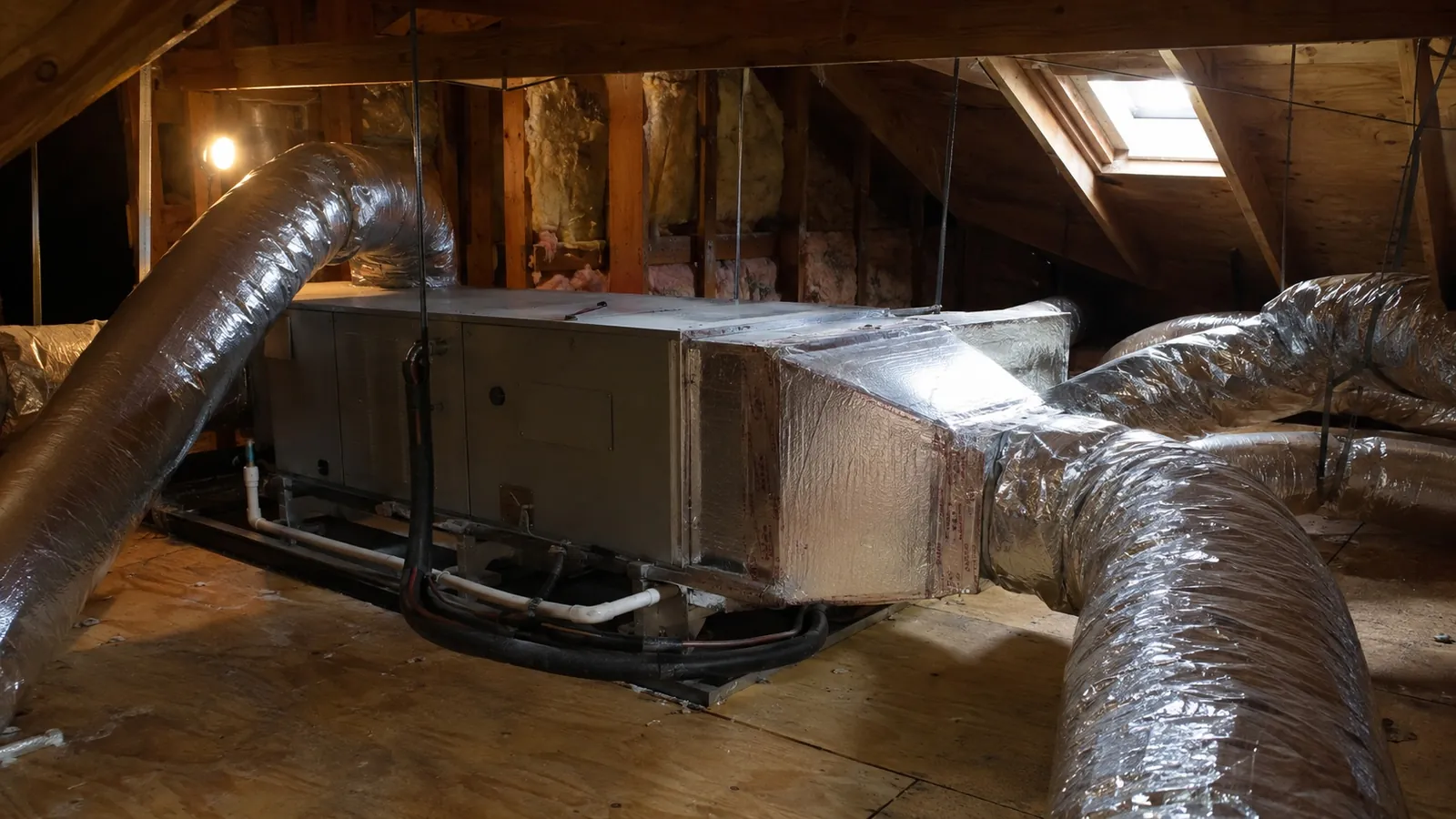
Leak testing, sealing, resizing, replacement and rerouting. Leaky attic ducts dump conditioned air into a space that can run well over 120°F in summer.
Zoning and airflow
Dampers, zoning systems and air balancing for houses where one thermostat cannot satisfy two floors.
Upstairs will not cool
The single most common comfort complaint in two-storey Fort Bend County houses, and what actually fixes it.
Indoor air quality
Filtration, humidity control and ventilation. Relevant in a metro that averages around 75% relative humidity.
Equipment and specialities
Other systems we work on
Ductless mini-splits
For garage conversions, additions, sunrooms, offices and any space the main system was never sized to serve.
Heating and furnaces
Gas furnaces and heat pumps. Lightly used most winters, then heavily depended on during a freeze event.
HVAC for remodels and new construction
Where the HVAC and construction sides of the company overlap. Additions, conversions, duct relocation and new zones.
Commercial HVAC
Rooftop units, buildouts and light commercial systems for offices, retail and warehouse space.
Before you call anyone
Two things worth checking on every HVAC company you consider
First, the licence. Air conditioning and refrigeration contractors in Texas are licensed by the Texas Department of Licensing and Regulation under its ACR programme. Ask for the licence number and check it against the TDLR licence search. That applies to this company as much as to anyone else you are comparing.
Second, the permit. A full system changeout in Stafford, Sugar Land or Missouri City requires a mechanical permit, and pulling it is the contractor’s job rather than yours. A quote that is unusually cheap because nobody intends to permit or inspect the work is not actually cheaper. It becomes your problem when you sell the house.
Neither of these is a sales pitch. They are the two questions that separate a real contractor from a truck with a magnet on the door, and they take about ninety seconds to ask.
What to have ready when you call
- Brand and rough age of the system, from the label on the outdoor unit
- What the thermostat is set to and what it reads
- Whether the outdoor unit is running, humming or silent
- Whether the problem is the whole house or specific rooms
None of this is required. It just shortens the conversation.
Where we work
Service areas
Coverage is strongest close to the Stafford office and thins out with distance. These four markets are where most jobs happen.
Stafford
The home market. Mixed housing ages, a large commercial corridor, and the office is minutes from most of the city.
Sugar Land
First Colony, Sugar Creek, New Territory, Greatwood, Telfair and Riverstone. Mostly two-storey homes with attic air handlers.
Missouri City
Quail Valley through Sienna. A wide spread of build dates, from late-sixties construction to current builds.
Southwest Houston
Sharpstown, Westbury, Meyerland, Braeswood and Fondren. Mid-century homes where the duct system is often the real problem.
Questions about HVAC service
What is the difference between AC repair and HVAC service?
Do you service systems you did not install?
Do you handle commercial buildings as well as houses?
Is there a maintenance plan?
Still not sure what you are dealing with? A technician can tell you in one visit.
Call (866) 427-9264Not sure which of these you need?
Describe what the system is doing and someone will tell you which category it falls into, including when the answer is that it can wait.