Component
Clogged AC condensate drain line
The single most common reason a working air conditioner shuts itself down on a hot afternoon in this part of Texas. It is also among the cheapest things to prevent.
What it is and why it matters
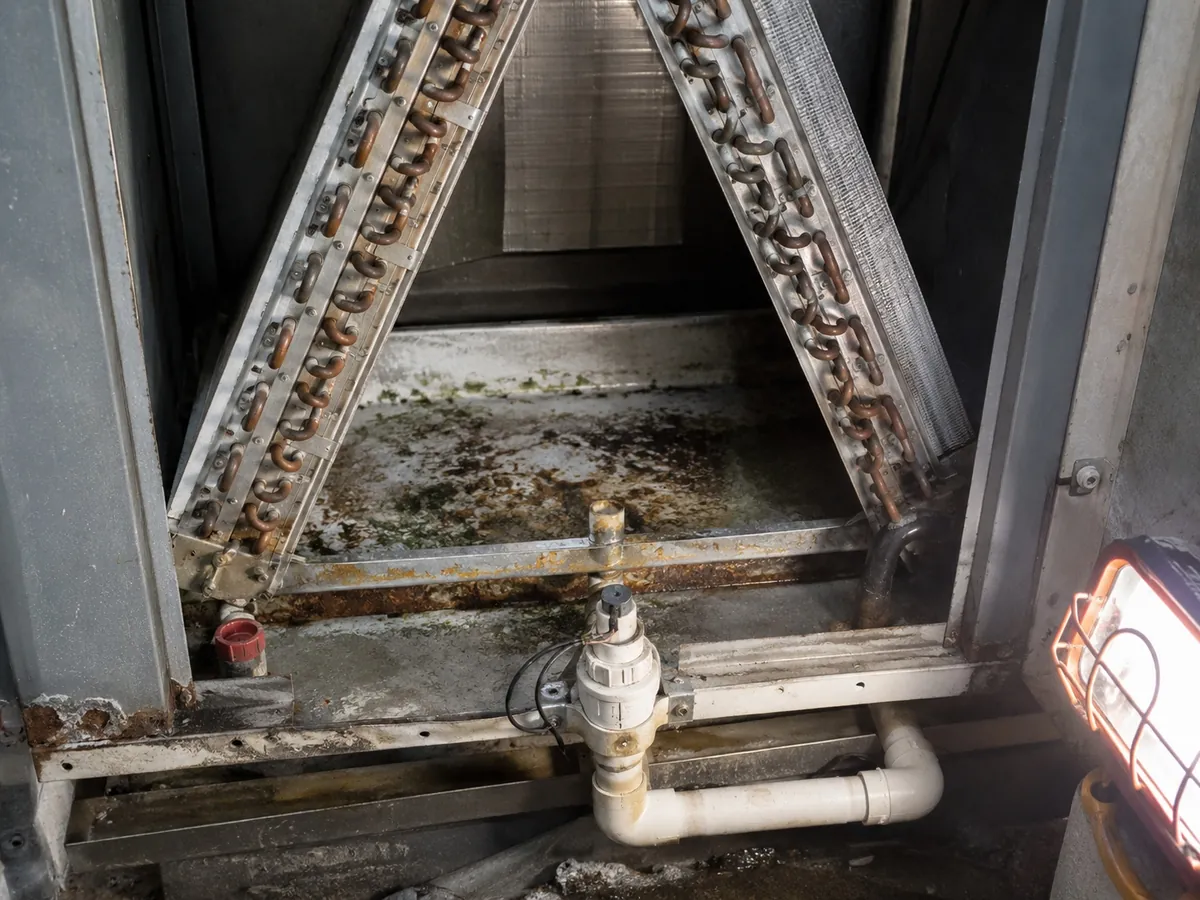
An evaporator coil is a cold surface in humid air, so water condenses on it constantly while the system runs. That water collects in a pan and leaves the house through a PVC condensate drain line, usually running across the attic.
That line stays damp, warm and dark for seven months a year, which is close to ideal conditions for algae and biological slime. As growth accumulates, the line restricts and then blocks. Water backs up into the pan, a float switch (if fitted and working) shuts the system down, and you lose cooling on the hottest day of the year.
If there is no float switch, or it fails, the pan overflows instead. See AC water leaks.
Warning signs, earliest first
- Water dripping from a pipe high on an exterior wall, often above a window
- Standing water in the primary drain pan
- A musty smell when the system starts
- The system shutting itself off on hot afternoons and restarting later
- Any water at all in the secondary pan beneath the air handler
- A stain appearing on a ceiling
Each of these is a stage. The earlier ones cost far less to act on than the last one.
Call (866) 427-9264The repair
What clearing it properly involves
Blowing the line out is the beginning rather than the whole job. A drain that blocks twice in a season usually means the first visit stopped too early.
Clear the blockage
Vacuum or pressure applied at the appropriate access point to remove the obstruction and whatever is behind it, then confirm the line runs freely rather than merely dripping.
Clean the pan
The pan is where the growth starts. A cleared line draining into a fouled pan blocks again quickly, which is the usual reason a clog seems to come straight back.
Check pan condition
Corrosion in a metal pan or cracking in a plastic one means the pan itself needs replacing. A perfect drain line does not help if the pan leaks.
Test the float switch
Confirm it actually interrupts the control circuit when the water level rises. A float switch that has failed in the closed position offers no protection and nobody knows until the ceiling does.
Check slope and support
Gravity drains need fall. A line that sags between supports holds water at the low point, which is where the next blockage forms.
Treat and advise
A condensate treatment that inhibits regrowth, and a straight answer about how often this particular system will need attention based on what was found.
Prevention
The cheapest maintenance item in this climate
Most maintenance arguments are about extending equipment life, which is real but hard to quantify. This one is different, because the failure it prevents has a specific and immediate cost.
Clearing a drain line annually is a small job. Replacing a bedroom ceiling, dealing with insulation that has been soaked, and managing what grows in a wall cavity afterwards is not. In a climate this humid, with most air handlers sitting in attics above finished space, that asymmetry is the whole argument.
There are also two things a homeowner can genuinely do between visits. Change the filter on schedule, because a dirty coil sheds more into the pan. And once a month in summer, walk outside and look at the secondary drain outlet. If it is dripping, the primary line is already blocked and you have found out before the ceiling did.
Worth knowing before you call
- Whether the system is currently running or has shut itself off
- Whether you can see standing water in the pan
- Whether anything is dripping from an outdoor pipe
- Where the indoor unit is: attic, closet or garage
- Whether this has happened before, and how recently
24/7 emergency HVAC service. Office monday - saturday, 9:00am - 6:00pm.
Related pages
AC water leak
What happens when the blockage is not caught in time.
Float switch repair
The safety device that shuts the system down when this happens.
AC not turning on
A tripped float switch is a leading cause of a dead system.
HVAC maintenance
Annual drain service, and what else is in the visit.
Indoor air quality
Standing water in a pan is a common source of musty smells.
AC repair
The broader diagnostic service.
Drain line questions
Can I clear the drain line myself with a shop vacuum?
Should I pour bleach down the drain line?
How often does the line need clearing?
Why does this happen so much more here than where I used to live?
If the system has already shut itself down once this summer, clearing the line is the cheap version of this conversation.
Call (866) 427-9264Get it cleared before it finds your ceiling
Drain service is one of the smallest jobs in HVAC and prevents one of the most expensive kinds of damage in a Houston attic.